Welcome to EEMS 2027


Taking place from June 11 to 13, 2027 2nd International Conference on Electromagnetic Engineering & Microwave Systems (EEMS 2027) will be held in Hangzhou, China. Co-sponsored by Yangtze Delta Region Academy of Beijing Institute of Technology (Jiaxing), Zhejiang University, Hangzhou Dianzi University, and Ningbo University, the conference aims to fully leverage Hangzhou’s unique strengths in fostering innovation, creating a world-class international exchange platform that brings together global academics, industry leaders, and technology innovators. It will serve as a dynamic venue for sharing cutting-edge insights, building cross-border collaboration networks, and driving technological advancements in the fields of electromagnetic engineering and microwave systems.

Prospective authors are invited to submit original contributions for publication in the conference proceedings. Join us at EEMS 2027 to help shape the future of the field.

Hangzhou, China

Conference Proceedings

All submissions will be sent for double-blind review. Accepted papers with registration and presentation will be published in Conference Proceedings, and submitted for index by Ei Compendex and Scopus.

Important Dates

Submission Deadline: January 10th, 2027
Notification Date: February 10th, 2027
Registration Deadline: February 25th, 2027
Camera Ready: February 25th, 2027

Submission Method

Submissions including full papers or abstract should be submitted via Electronic Submission System. Please contact email if you meet any question during submission.

Download

The authors are suggested to use the EEMS Formatting Template to meet formatting requirements.
Word Template Download
LaTex Template Download

Registration

To be considered for final acceptance and publication, each paper MUST have at least one paid full registration by the registration deadline. Papers that do not adhere to this requirement will be excluded from the proceedings.

Conference Awards

Best Paper Award
Excellent Oral Presentation Award
Excellent Poster Presentation Award

Track 1: Microwave Devices and Circuit Design

Modeling and Design of Active/Passive Devices
Design of Power Amplifiers and Low-Noise Amplifiers
Design of Microwave/Millimeter-Wave Integrated Circuits (MMIC/RFIC)
Design of Filters, Couplers and Power Dividers
Reconfigurable and Tunable Microwave Circuits
Microwave Devices Based on Wide Bandgap Semiconductors
Terahertz Devices and Circuit Design
Low-Power Microwave/RF Device Design

Track 2: Antenna Theory and System Design

Design of Microstrip Antennas and Antenna Arrays
Phased Array and MIMO Antenna Technologies
Design of Metamaterial/Metasurface Antennas
Reconfigurable and Conformal Antenna Technologies
Intelligent Reflecting Surface Antenna Systems
Terahertz Antennas and Imaging Systems
Low-Profile and Miniaturized Antenna Design
Automotive-Grade Antennas and RF Systems
Modeling and Design of Antennas in Packaging
Multi-Physics Simulation and Design of Antennas Radomes

Track 3: Microwave Materials and Process Technologies

Microwave Dielectric Materials and Property Regulation
RF Magnetic Materials and Ferrite Devices
Fabrication Processes for Metamaterials/Metasurfaces
Substrate Materials and Selection for Microwave Circuits
Thin-Film/Thick-Film Preparation and Microwave Applications
3D Printing Technologies for Microwave Devices
Material Aging and Microwave Performance Stability
Characterization and Testing Technologies for Microwave Materials

Track 4: Computational Electromagnetics and Numerical Algorithms

FEM and MoM for Electromagnetic Simulation
Finite Difference Time Domain (FDTD) Algorithms
Fast Multipole and MLFMA Algorithms
Multi-Physics Coupling Simulation Algorithms
Inverse Scattering and Electromagnetic Imaging Algorithms
Uncertainty Quantification in Electromagnetic and Multiphysics Simulation
Fast Solution for Large-Scale Electromagnetic and Multiphysics Problems
Hybrid Electromagnetic-Circuit Algorithms
Electromagnetic Computing for Photonic Crystals and Metamaterials

Track 5: Advanced RF Integration and Packaging Technologies

RF Integration Technologies in 3D-IC
RF Design for System-in-Package (SiP)
Interconnection Technologies for Multi-Chip Modules (MCM)
RF Interconnection Design for TSV/TGV
EMC Design for RF Chiplet Integration and Packaging
Heterogeneous Integration RF Technologies
Thermal Management for RF Chiplet Packaging
Electromagnetic Protection for RF Front-ends
Millimeter-Wave Packaging and Antenna Integration

Track 6: Electromagnetic Compatibility and Safety

System-Level EMC Design and Layout
Electromagnetic Interference (EMI) Suppression Technologies
Signal Integrity (SI) for High-Speed Digital Links
Power Integrity (PI) Analysis and Design
Shielding and Grounding Technologies
EMC Design for 5G/6G Systems
EMC Testing and Certification for Automotive Electronics
PCB-Level EMC Simulation and Optimization
Multiphysics Compatibility Design and Management

Track 7: Microwave Measurement and Remote Sensing Technologies

Antenna Near-Field/Far-Field Measurement Technologies
Design of Microwave/Millimeter-Wave Test Systems
RCS Measurement and Target Characteristic Analysis
Measurement Error Analysis and Calibration Technologies
Microwave Remote Sensing Image Processing Technologies
Real-Time Microwave Measurement and Data Acquisition
UAV-Borne Microwave Remote Sensing Systems
Design of Portable Microwave Measurement Instruments

Track 8: Integrated Sensing and Communication (ISAC) Technologies

Waveform Design and Optimization for ISAC Systems
Resource Allocation and Scheduling Algorithms for ISAC
Target Detection and Parameter Estimation for ISAC
Design and Implementation of 6G ISAC Systems
ISAC Applications for V2X
Integration of ISAC and Intelligent Reflecting Surfaces
Distributed ISAC Network Technologies
EMC Design for ISAC Systems

Track 9: Bioelectromagnetics and Medical Applications

Design of Implantable Antennas and Sensors
Low-Power Biomedical RF Systems
Modeling of Electromagnetic Properties of Biological Tissues
Application of Microwave Imaging in Medical Diagnosis
Wearable Bioelectromagnetic Monitoring Devices
Biological Safety Assessment of Electromagnetic Radiation
RF Energy Harvesting for Medical Devices
RF Coil Design for Magnetic Resonance Imaging (MRI)
Electromagnetic Environment Effects and Protection

Track 10: AI-Enabled Electromagnetic Engineering Technologies

AI-Assisted Microwave Circuit Design and Optimization
AI-Accelerated Surrogate Models for Electromagnetic Simulation
Physics-Informed Neural Networks (PINNs) for Electromagnetics
AI-Driven Antenna Design and Optimization
AI-Assisted EMI Prediction and Suppression
Generative AI for Electromagnetic Device Inverse Design
AI-Driven Signal Processing for ISAC
AI-Based Beam Optimization for Large-Scale Antenna Arrays
AI-Based High-Dimensional Optimization for Multiphysics Design

Meet Hangzhou

Hangzhou, capital of Zhejiang, harmonizes poetic Jiangnan scenery and digital modernity. With over 2,200 years of history, it served as the Southern Song imperial capital and impressed Marco Polo deeply. West Lake, a UNESCO World Heritage Site, defines its soft, misty charm. It is the hometown of Longjing tea and fine silk, inheriting classic Chinese garden culture. Meanwhile, it grows into a global digital economy center. The city seamlessly combines serene lakes, time-honored craftsmanship, ancient cultural relics and booming tech industries, presenting a cozy, elegant lifestyle blending nature, tradition and innovation.
1

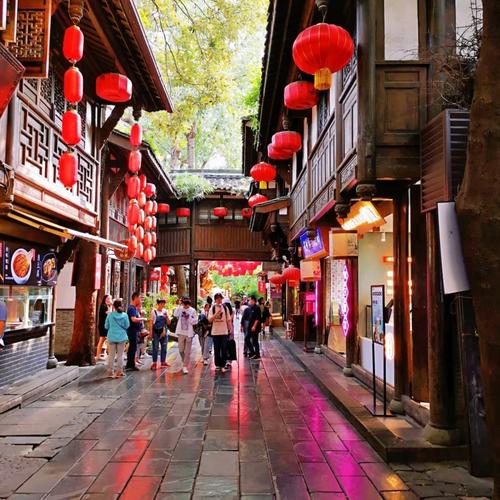
West Lake

A UNESCO World Heritage Site and Hangzhou’s symbol. Willow-shaded causeways, lotus ponds and distant hills form ink-wash scenery. It shows unique Jiangnan beauty with seasonal views, inspiring countless poems and folk tales, an unmissable poetic landmark.
2

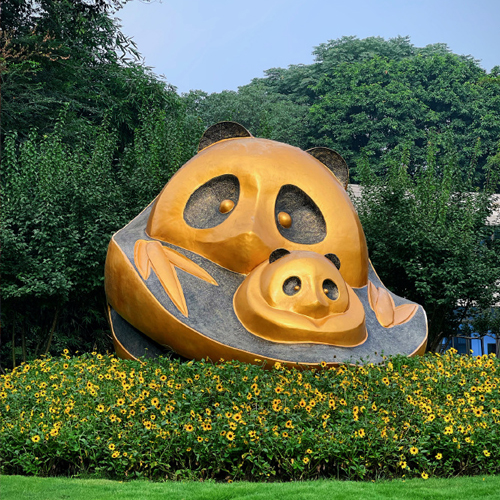
Longjing Tea Plantations

Origin of premium Dragon Well tea around West Lake. Humid hills nurture tender tea shoots. Visitors watch hand picking and traditional stir-frying, tasting fresh tea amid rolling green fields to experience Hangzhou’s slow pastoral culture.
3

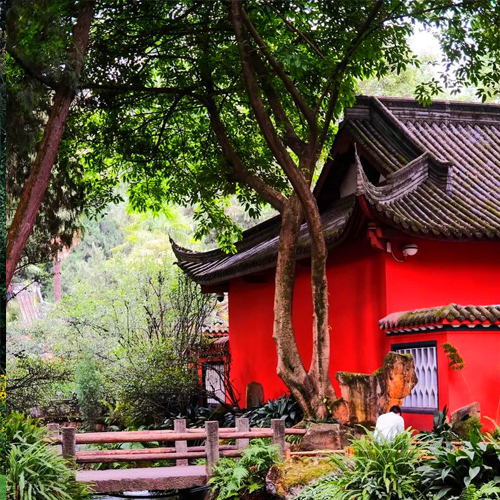
Lingyin Temple

A 1,700-year-old sacred Buddhist temple. Cliff grottoes, old cedar trees and incense-filled courtyards create tranquil vibes. It perfectly mixes solemn Buddhist culture, classic architecture and lush mountain greenery for inner peace.


Co-Sponsors 


Supporters